

Living Lab BIPV
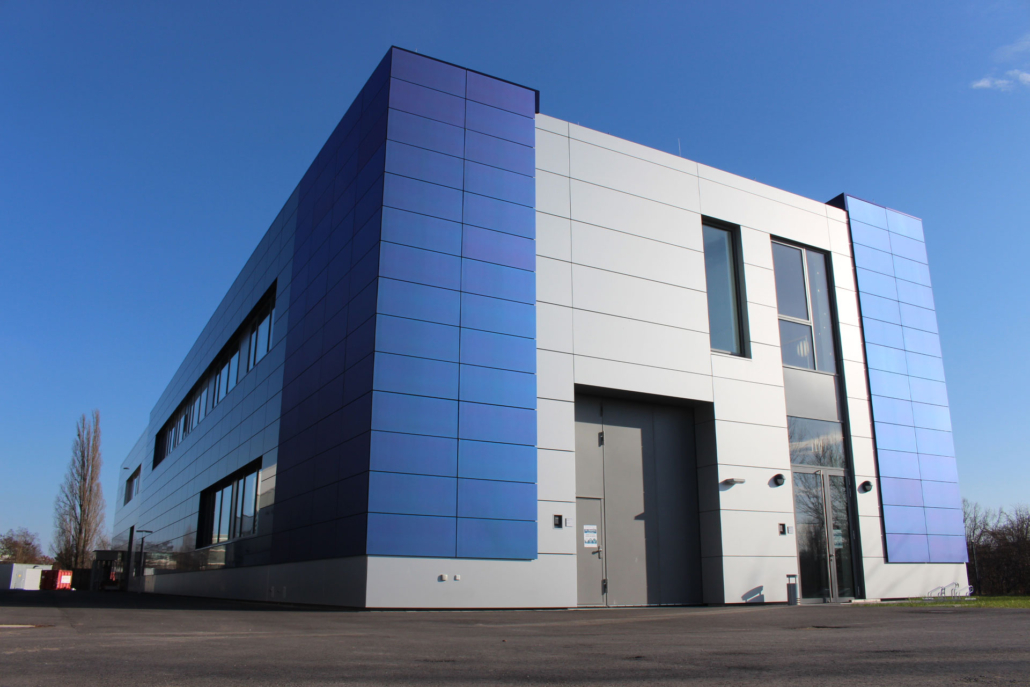
The Living Lab for Building-Integrated Photovoltaics (BIPV) is an innovative research facility featuring a photovoltaic façade that integrates solar energy solutions seamlessly into architectural design.
This living laboratory provides valuable insights into the real-world performance of PV modules and façade systems under diverse weather conditions and over extended periods. Equipped with various sensors both on the solar modules and within the façade, the lab offers a unique perspective on the potential of architectural PV integration, contributing directly to research and consulting activities to promote BIPV adoption.


Overview
The living laboratory for building-integrated photovoltaics (BIPV) is a research building with a photovoltaic (PV) façade in which special attention was paid to the design integration of the solar active elements. The living lab provides practical experience on the behavior of solar modules and the entire PV façade system in different seasons and weather conditions and over a long period of time. Equipped with different types of sensors at the solar modules and inside the façade, the building provides a unique inside into architectural-integrated PV. These findings flow directly into research and, as a demonstration object, into the BIPV consulting activities of HZB and thus benefit society.
Detailed Description
Purpose: The integration of photovoltaics into the built environment is still a niche application of PV. The two main reasons for this are (a) the specific requirements and boundary conditions for solar modules as building products and (b) the lack of knowledge within the architectural community about possibilities and opportunities that BIPV can offer. The Living lab for building-integrated photovoltaics at HZB offers experience with the planning, installation and operation a solar-active façade which is shared with architects and building owners, as well as realistic data of a full-size PV system integrated into a building envelope. In addition to the typical electrical data of a PV system, the lab also reveals the influence of the installation as a façade on the solar modules and vice versa.
Unique Features
- Full-size laboratory building with 380 m2 photovoltaic façades used, as a research environment and demonstration project.
- Aesthetic and functional integration of PV modules as an architectural solution for solar-active façades.
- Advanced monitoring of modules and PV system and of temperature and ventilation inside the façade.
Capabilities
- 360 frameless, colored PV modules installed at the southern, western, and northern façade.
- 50 kWp installed capacity deliver about 30 MWh energy yield.
- 120 measuring points and sensors in the PV façade record solar irradiation, as well as electrical and building physics parameters.
- Temperature sensors and airflow meters inside the ventilated curtain wall
- Variation of airgap behind the modules
- Advanced weather station at the top of the building
Further information
https://www.helmholtz-berlin.de/projects/pvcomb/forschen/living-lab-bipv/index_en.html
Contact Person
Helmholtz-Zentrum Berlin für Materialien und Energie
Dr. Björn Rau
bjoern.rau(at)helmholtz-berlin.de