
Loading
Solar TAP
  • Home
  • Project
  • Partners
  • Network
  • Infrastructures
  • About us
  • Contact
  • Menu Menu

Experience Helmholtz

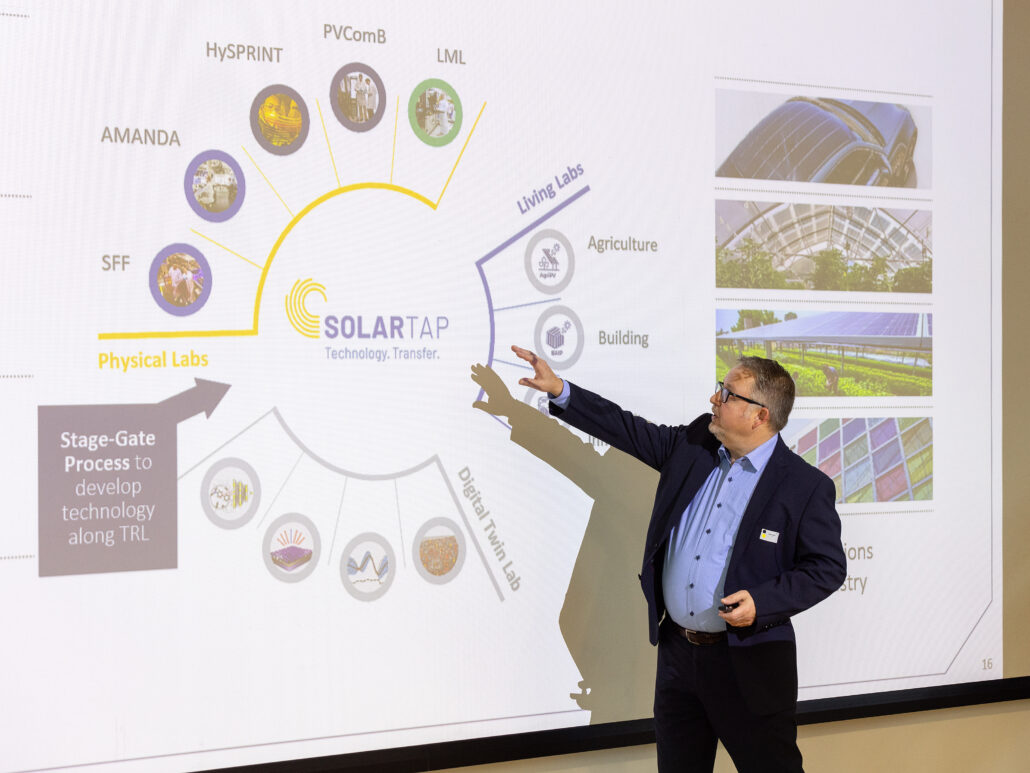
Solar TAP brings together Helmholtz infrastructures for advanced materials and technology in order to develop multi-benefit PV solutions. This innovative setup allows for the targeted development and refinement of PV technologies.

Industry partners can interact with Solar TAP as if it were a single, cohesive laboratory. This integrated approach ensures efficient collaboration, rapid prototyping, and accelerated innovation in PV technology development. With Solar TAP the journey from concept to market-ready technology is streamlined and optimized, driving the future of sustainable energy solutions.
Solar TAP Infrastructure

Visit our Solar TAP Infrastruture

The Solar TAP platform combines some of the world’s leading research infrastructures to advance, simulate, and demonstrate emerging photovoltaic technologies. This unique platform offers flexible use of state-of-the-art facilities.
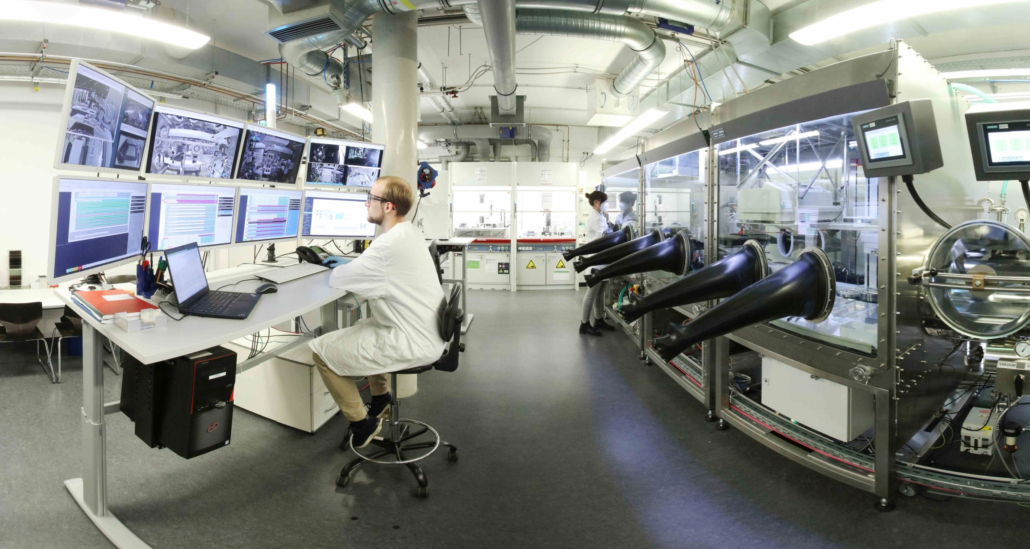
FZJ operates within HI ERN several technology acceleration platforms (TAP) to automate synthesis, film formation, device manufacturing and characterization. These lines make it possible to optimize multiple parameters simultaneously and support researchers in the materials discovery process from materials inception to device application. The “Autonomous Materials and Device Application Platform” (AMANDA) is a custom software backbone with the capability of controlling multiple Materials Accelerations Platforms. The software allows for a high degree of automation to accelerate research while keeping the lab processes flexible. Data is collected at all stages of the process for a comprehensive and complete documentation. All data sets are interlinked and retrievable to allow systematic analyses across experiments. Processing is conducted automatically on several material acceleration platforms (MAPs) which can transport substrates, load spincoaters, perform spincoating, pattern structures and anneal the films sequentially on up to 96 substrates in parallel with variable processing parameters. All processes may be run in inert conditions. An attached evaporator, automated jV-characterization and an integrated accelerated stability testing station make it possible to finish and completely characterize photovoltaic devices made with novel materials.

AMANDA Lab

The AMANDA Lab is an advanced, automated platform that uses AI to accelerate the synthesis, screening and optimization of materials for printed solar cells, including perovskite and organic photovoltaics.
LEARN MORE
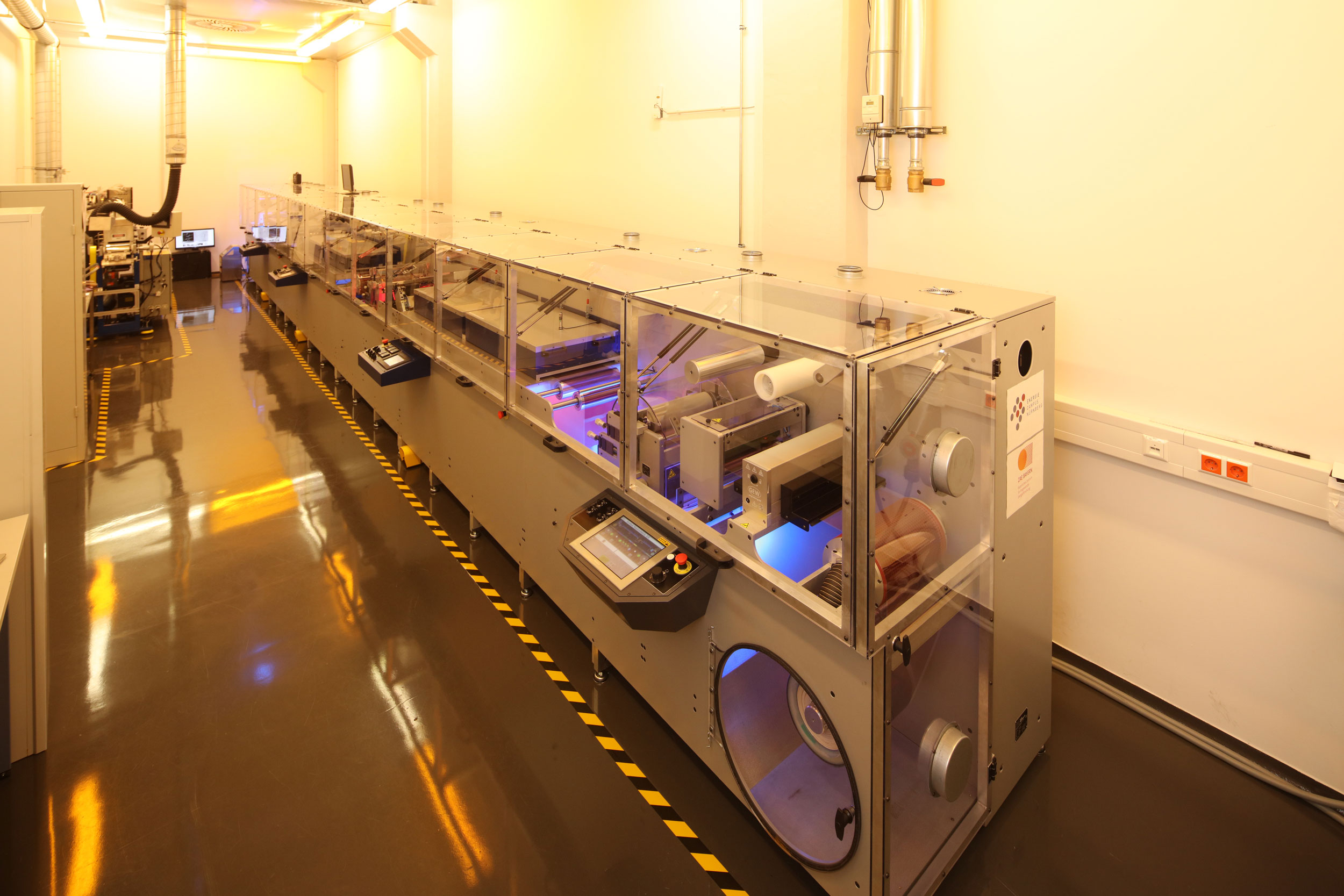
The “Solar Factory of the Future” (SFF) develops printing, coating, and patterning processes for high-throughput (HT) manufacturing of fully solution processed electronics, particularly of emerging photovoltaics (e-PV), utilizing its unique infrastructure, comprising roll-to-roll coating/printing, laser patterning, and encapsulation. The unique expertise of the SFF in the field of upscaling production processes of printed PV to a commercially relevant level originates from the combination of rational methods of ink formulation with smart coating and patterning procedures. As one of few research institutions worldwide, SFF is set up to provide module batch sizes up to the 100 m2 regime and has the competence to scale the output of its R2R processing line to the MW level. The combination of scientific expertise and technical competence positions the SFF to bridge the gap between laboratory research and industrial manufacturing regime. The SFF currently holds the efficiency world record for large area organic PV modules.

Solar Factory of the Future

The Roll-to-Roll slot die printing machine is a cutting-edge industrial tool for producing flexible organic and perovskite solar modules, ideal for large-scale prototyping and high-throughput material research.
LEARN MORE
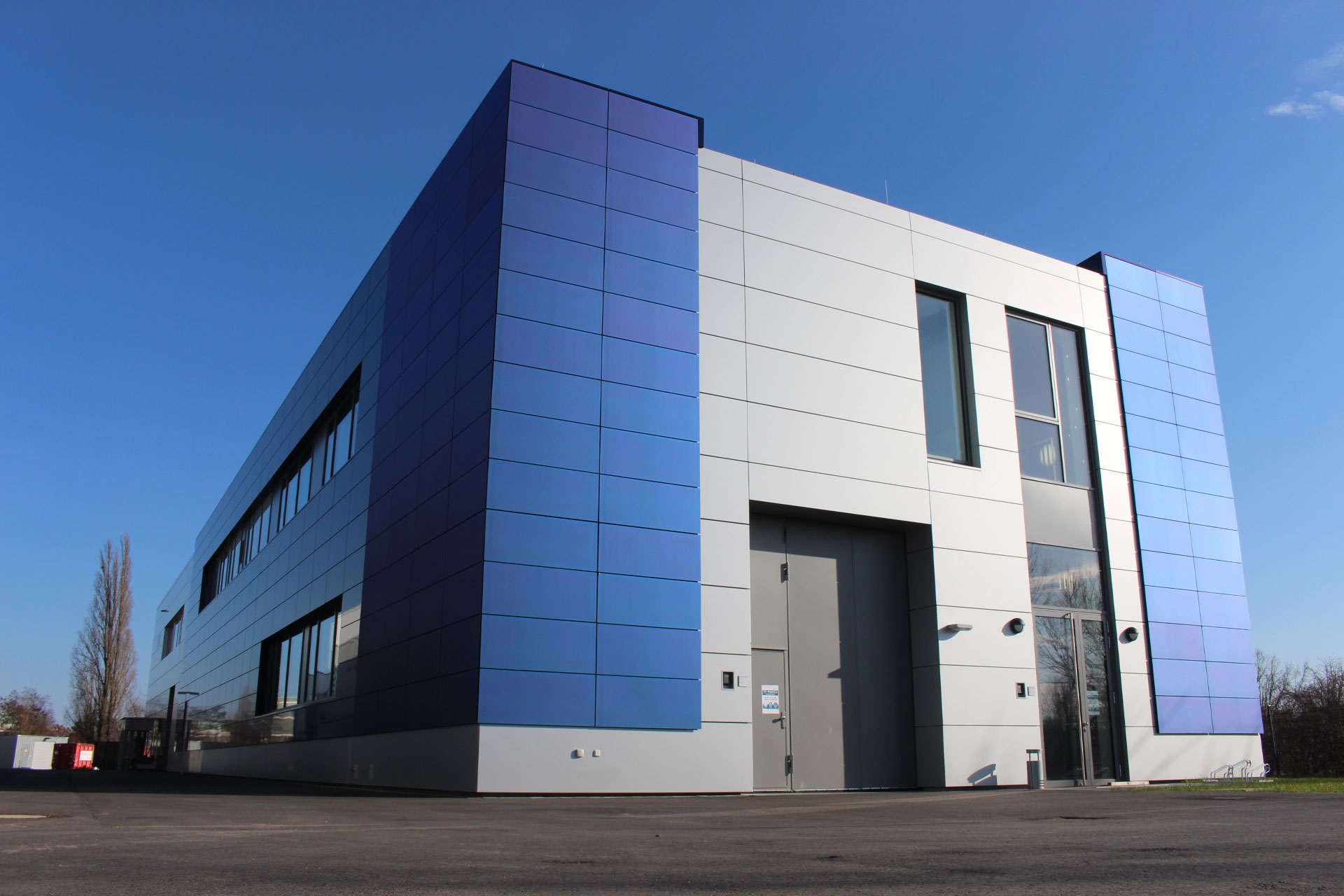
At the Helmholtz Zentrum Berlin, a living lab has been constructed 2021 with building integrated photovoltaics in colored panels on three of the four sides (South, West and North), with a total nominal power around 50 kW. For research purposes, the ventilated curtain wall facades, with varying insulation situations behind the PV modules, are extensively monitored 24/7 for building specific parameters such as temperature and air flow, next to the more usual electrical, optical and meteorological data. For a new ensemble of research buildings, on the same location, a first building has been designed by the prize-winning architects and is planned for delivery in 2025. Part of this building will be a number of metal façade elements, which are very well suited for and planned as testing areas for flexible solar modules. This part of the living lab will offer a perfect testing area for the Solar TAP products and will allow for a one-to-one comparison to more traditional PV elements but will also highlight the additional value that Solar TAP´s flexible PV technology can offer.

Living Lab BIPV

The Living Lab for BIPV is a research facility that integrates solar energy solutions into architectural design providing valuable insights into the performance of PV modules and façade systems under real-world conditions.
LEARN MORE
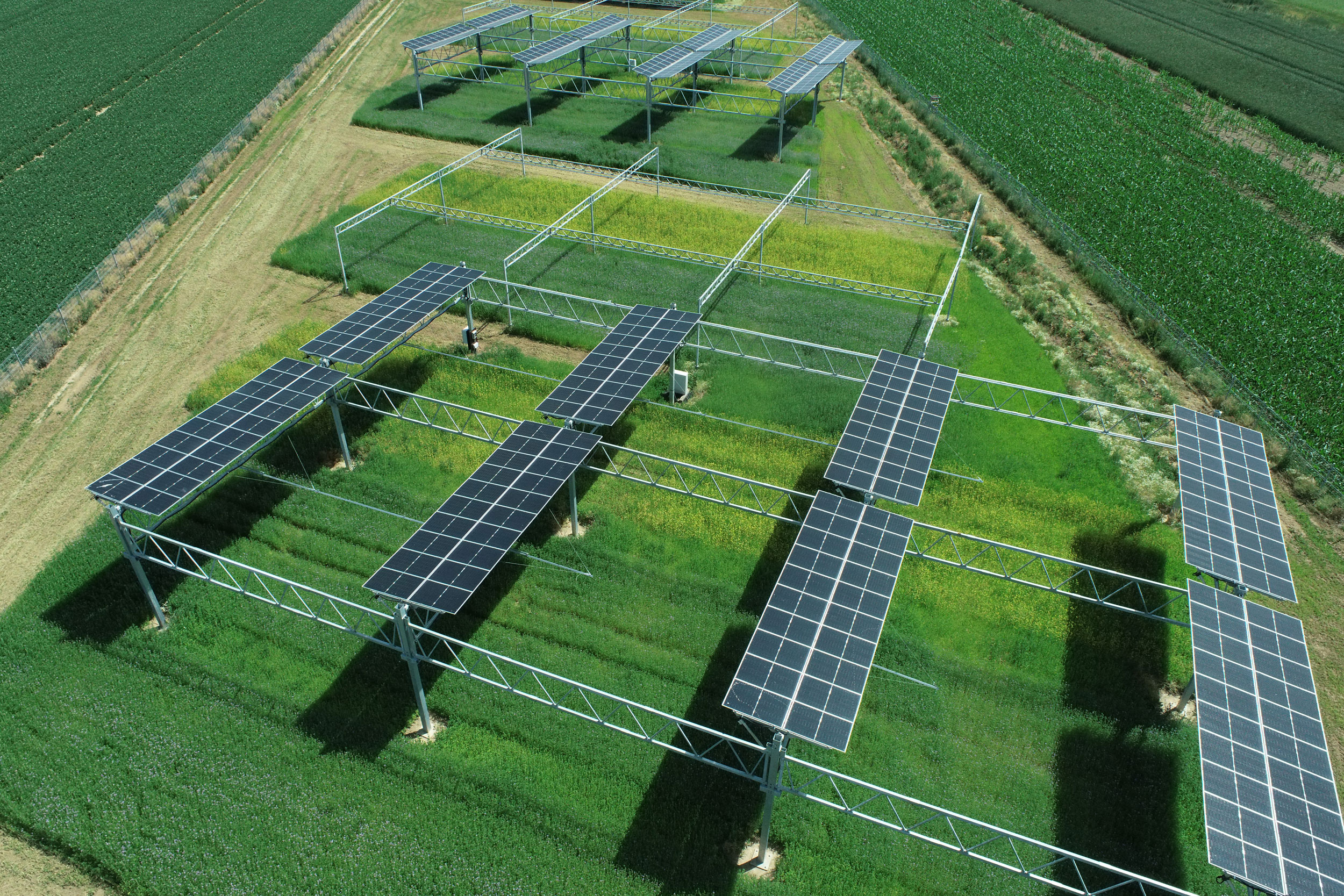
The integration of novel PV-technologies will focus on various application cases with high potential. Agri-Horti-PV application development will build on the Agri-Horti-PV test site (Agri-Food-Energy Park -- Agri FEe) established by FZJ: Plant Sciences at Alt-Morschenich in the context of BioökonomieREVIER (a large-scale regional transformation of the lignite-mining region Rheinisches Revier into a model region for sustainable bioeconomy ).

Agri-Food-Energy Park

The Agri-Food-Energy Park at FZJ integrates photovoltaic and agricultural technologies promoting collaboration across industries with diverse PV installations on two hectares.

LEARN MORE

Organic PV lab at KIT

The Organic Photovoltaics Lab at KIT combines advanced materials research with scalable device processing for organic and hybrid photovoltaics.

LEARN MORE
Solar TAP links existing acceleration platforms for semiconductor materials, photovoltaic devices, module processing, and application development into one technology acceleration platform to boost the development of photovoltaic applications. Automated and interlinked labs focus on multiple stages of technology development and open new possibilities for digitalization and computer-aided design. These design efforts are bundled in the Digital Twin Lab that focuses on developing a virtual representation of the entire scientific and economic value chain: The digital twin.

Digital Twin

The Solar TAP digital twin links simulation and data to accelerate solar innovation through predictive, data-driven design. Learn more in our videos.

LEARN MORE
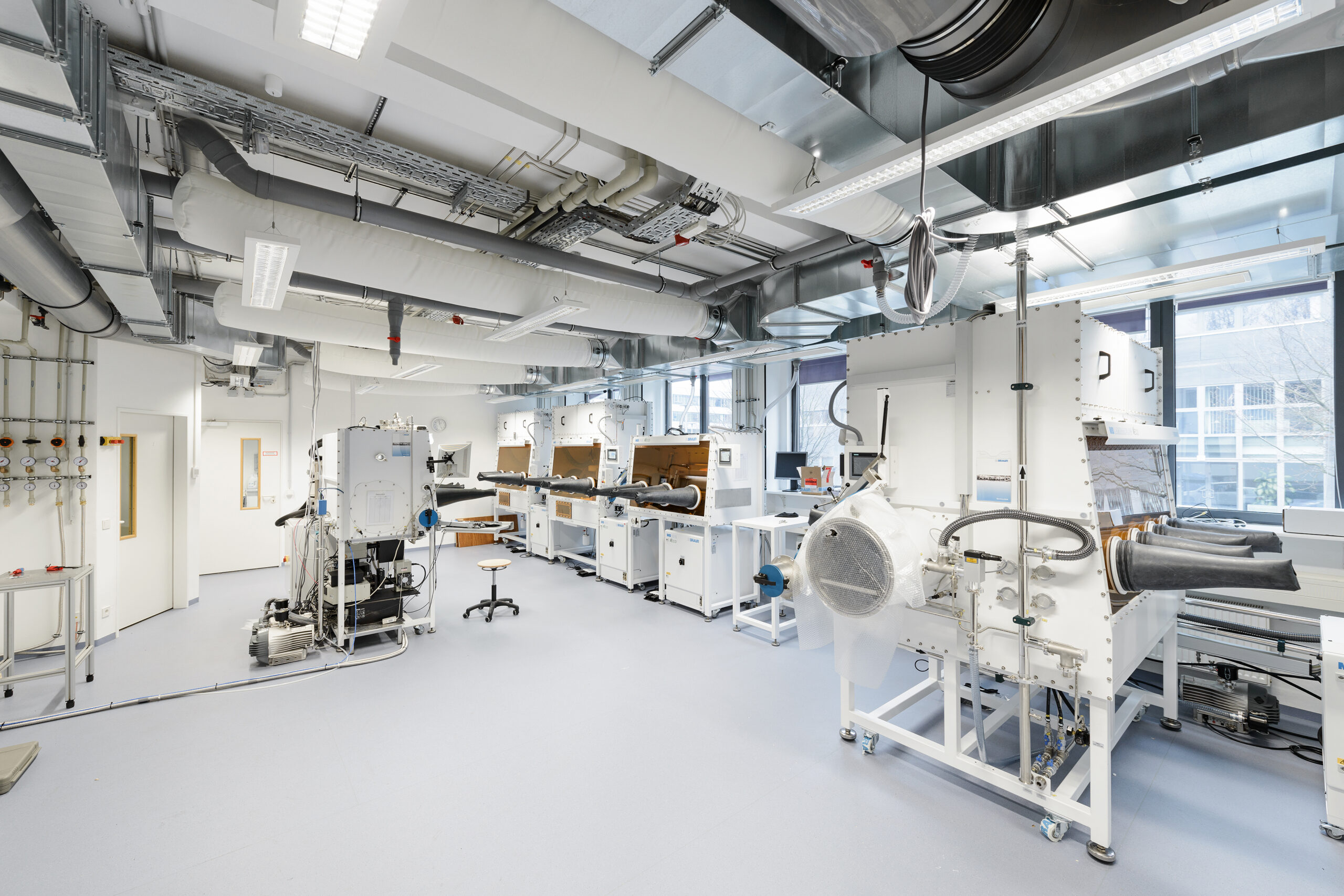
Thin-film photovoltaic technologies and products are developed at PVcomB together with industry. The transfer of technology and knowledge takes place in research projects with industrial partners and through the training of highly qualified specialists.

PVcomB Lab

The PVcomB Lab focuses on developing monolithic CIGS and perovskite tandem solar cells with an emphasis on CIGS bottom devices and flexible substrates.
LEARN MORE

HySprint & KOALA Lab

The combined HySprint and KOALA lab in Berlin serves as a key innovation hub for scalable deposition and advanced characterization of perovskite and tandem solar cells.

LEARN MORE

IRIS photovoltaic lab

The IRIS photovoltaic lab in Berlin Adlershof specializes in precision fabrication and characterization of perovskite solar cells focusing on microscopy, thin-film analysis and stability under varying conditions.

LEARN MORE

Perovskite lab at KIT

The Perovskite lab at KIT focuses on high-efficiency device concepts for perovskite-based photovoltaics. The lab supports the development of tandem, semi-transparent, and scalable solar cell architectures.

LEARN MORE

Search

Search Search

Recent Posts

  • Solar TAP Featured as a Success Story in Germany’s Federal Energy Research Report 2026
  • Perovskite Solar Cells: From Research to Real-World Impact
  • Helmholtz Tech & Industry Day 2026
  • Solar TAP at HANNOVER MESSE 2026 | Connecting Research and Industry for Next-Generation Photovoltaics
  • Solar TAP nominated for the Endeavours Award 2026

Recent Comments

  • arderbor elnot on NGSE11 – Next Generation Solar Energy 2026
  • arderbor elnot on Energy Campus Nürnberg (EnCN)

Archives

  • October 2026
  • June 2026
  • April 2026
  • March 2026
  • February 2026
  • December 2025
  • November 2025
  • October 2025
  • September 2025
  • July 2025
  • June 2025
  • April 2025
  • March 2025
  • February 2025
  • January 2025
  • December 2024
  • November 2024
  • October 2024
  • September 2024
  • August 2024
  • June 2024
  • April 2024
  • December 2023
  • November 2023
  • July 2023
  • April 2023

Categories

  • Event review
  • Helmholtz
  • Interview
  • News
  • Prize
  • Science Highlight
  • Uncategorized

Meta

  • Log in
  • Entries feed
  • Comments feed
  • WordPress.org
© Copyright - Solar TAP - Energy Redefined
  • Legal Notice
  • Privacy Policy
Scroll to top Scroll to top Scroll to top