Loading
Solar TAP
  • Home
  • Project
  • Partners
  • Network
  • Infrastructures
  • About us
  • Contact
  • Menu Menu

Perovskite Solar Cells: From Research to Real-World Impact

19. June 2026/in Interview/by Stefanie Ditze

How can breakthrough photovoltaic research become tomorrow’s energy solutions? A recent SAT.1 Bayern feature highlights the potential of perovskite solar cells and the collaborative innovation ecosystem that is helping bring this emerging technology closer to real-world applications.

From Laboratory Innovation to Future Applications

From lightweight solar foils to building-integrated photovoltaics and future space applications, perovskite solar cells are opening exciting new possibilities for the energy transition.

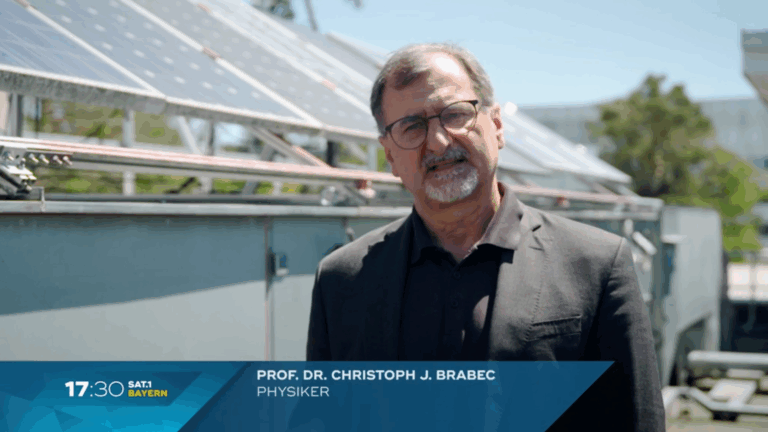
In a recent SAT.1 Bayern feature, Prof. Dr. Brabec, steering committee member of Solar TAP and Director of the Institute of Energy Materials and Devices – Photovoltaics (IMD-3) at Forschungszentrum Jülich, presented the remarkable potential of this next-generation photovoltaic technology.

Unlike conventional silicon photovoltaics, perovskite solar cells can be manufactured on ultra-thin, lightweight and flexible substrates. Their unique material properties enable applications beyond traditional rooftop installations, including building façades, flexible solar films, lightweight structures and potentially even future space technologies.

These advances demonstrate how innovative photovoltaic materials have the potential to fundamentally expand where and how solar energy can be generated.

Connecting Research Excellence with Industrial Innovation

Scientific breakthroughs create opportunities but collaboration is what turns innovation into impact.

As a Helmholtz innovation platform, Solar TAP connects leading research institutions, technology developers and industrial partners to help accelerate the transfer of next-generation photovoltaic technologies into scalable manufacturing and future products.

The research highlighted in the SAT.1 Bayern feature illustrates this mission in practice. At IMD-3, automated pipetting robots and precision blade-coating systems enable the highly reproducible fabrication of laboratory-scale perovskite solar cells. These advanced processes not only support cutting-edge materials research but also generate valuable knowledge for future industrial manufacturing.

Scaling Tomorrow’s Solar Technologies

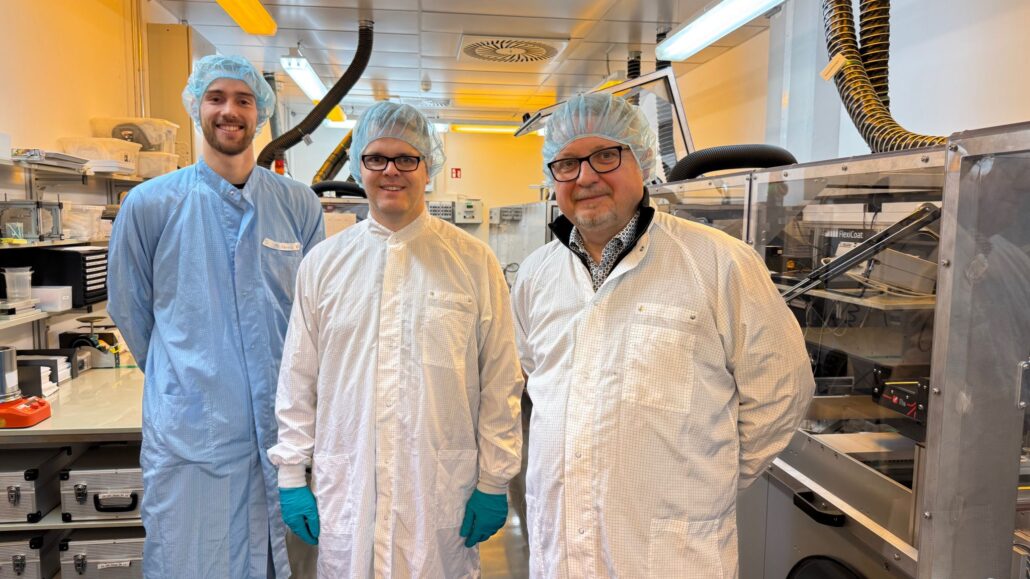
A key element of this innovation ecosystem is the Solar Factory of the Future, where photovoltaic materials and complete solar cells can be deposited and printed on flexible substrates using scalable, industry-relevant manufacturing technologies.

This unique infrastructure enables researchers and industry partners to develop, validate and optimize production processes under realistic conditions and bridging the gap between laboratory discoveries and commercial applications.

By combining cutting-edge research, advanced manufacturing infrastructure and strong partnerships across science and industry, Solar TAP helps accelerate the development of sustainable photovoltaic technologies and strengthens Europe’s innovation ecosystem.
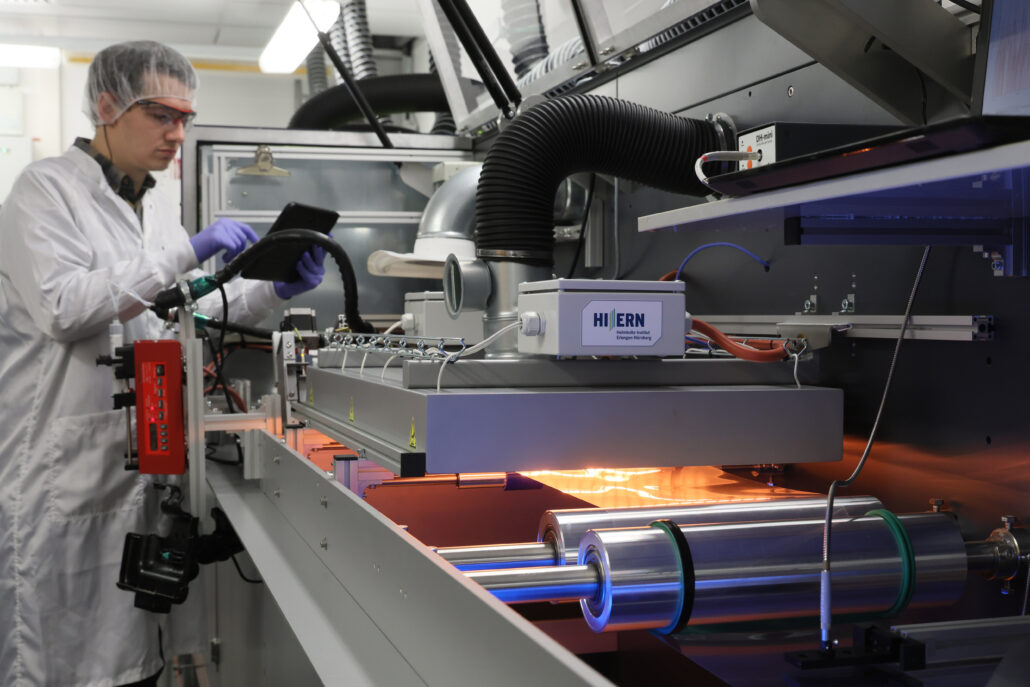
The Solar Factory of the Future is the key element of this innovation ecosystem. Copyright: Kurt Fuchs/ SOLARTAP

Watch the Feature

The SAT.1 Bayern report offers fascinating insights into the research, people and technologies shaping the future of photovoltaics.

Watch the feature and discover how collaborative innovation is helping bring perovskite solar cells from research to real-world impact.

The SAT.1 Bayern feature “Solarzellen der Zukunft? Forscher setzen auf Perowskit-Technologie” aired on 16 June 2026 as part of the programme “17:30 SAT.1 Bayern”.


https://solartap.de/wp-content/uploads/2026/06/SAT.1_Bayern_CJB_Pero-768x432-1.png 432 768 Stefanie Ditze https://solartap.de/wp-content/uploads/2023/07/logo-solar-tap-navigation.png Stefanie Ditze2026-06-19 20:56:582026-07-06 21:00:56Perovskite Solar Cells: From Research to Real-World Impact

Solar TAP Expert Featured on German TV Show

17. November 2025/in News, Interview/by Stefanie Ditze

Solar TAP Expert Featured on German TV Show Showcasing Breakthrough PV Recycling Technology.

The rapid global expansion of photovoltaics brings with it an important long-term challenge: the responsible and resource-efficient recycling of end-of-life solar modules. By 2050, global PV waste is expected to reach 21–35 million tons, containing valuable materials such as glass, aluminum, silicon, silver, and copper. The recovery and reuse of these components will play a crucial role in building a sustainable and resilient solar industry.

In this context, Dr. Ian Marius Peters, Principal Investigator of Solar TAP at the Helmholtz Institute Erlangen-Nürnberg for Renewable Energies (HI ERN), was recently invited as an expert on the popular German science TV program “Einfach Genial” (“Simply Ingenious”). The episode highlighted an innovative recycling technology developed by FLAXRES GmbH in Dresden.

FLAXRES presented a novel approach based on ultrabright light pulses — 50,000 to 80,000 times brighter than the sun — capable of separating PV modules into their components within milliseconds. This technique aims to enable the clean recovery of high-value materials, offering a potential leap forward for circularity in the PV sector.

Dr. Peters provided scientific insights into the challenges and opportunities of scaling advanced recycling solutions, emphasizing their relevance for a future-proof solar energy system.

Copyright: MDR/Einfach Genial

“Technologies that improve material recovery are essential for a circular PV economy,” Dr. Peters noted during the broadcast.

The feature underscores the importance of collaborative efforts between research institutions, industry partners, and innovators — a core mission of Solar TAP, which supports the development and implementation of transformative technologies across the entire solar lifecycle.

Watch the full episode in German here.

Solar TAP continues to promote research, innovation, and knowledge exchange to advance sustainable PV deployment and circular material flows throughout Europe and beyond.

https://solartap.de/wp-content/uploads/2025/11/MDR-Einfach-Genial.png 776 1391 Stefanie Ditze https://solartap.de/wp-content/uploads/2023/07/logo-solar-tap-navigation.png Stefanie Ditze2025-11-17 11:57:142025-11-17 11:57:15Solar TAP Expert Featured on German TV Show

Accelerating the breakthrough of emerging photovoltaics

18. February 2025/in Interview/by Stefanie Ditze

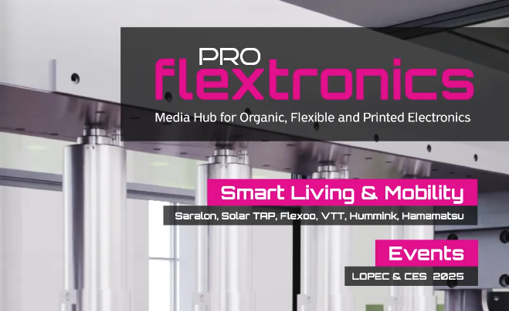
Leading Innovation in Photovoltaic Technology. An Interview with Dr. Jens Hauch, Solar TAP Manager, in the PRO Flextronics magazine.

As pioneers in the solar energy sector, Solar TAP is delighted to share groundbreaking advancements in the realm of organic photovoltaics and perovskites, as detailed in the recent feature in PRO Flextronics magazine. Dr. Jens Hauch, Head of Research at Helmholtz Institute Erlangen-Nürnberg for Renewable Energies, highlights the escalating efficiencies and potential of perovskite technology, poised to surpass traditional silicon-based solar cells.

This comprehensive interview covers not only the technical aspects but also the practical applications that are bringing these innovations closer to commercial viability. From powering IoT devices to transforming agricultural practices through agrivoltaics, Solar TAP is at the forefront of integrating solar technology into everyday life.

For an in-depth exploration of these transformative technologies and their potential impacts on the industry and the world, access the complete article here. Dive into the details of how Solar TAP is accelerating the transition from lab to market, supporting the entire value chain in solar module production.

https://solartap.de/wp-content/uploads/2025/02/Cover-Pro-Flextronics_v2.png 311 509 Stefanie Ditze https://solartap.de/wp-content/uploads/2023/07/logo-solar-tap-navigation.png Stefanie Ditze2025-02-18 10:42:002025-03-12 12:55:37Accelerating the breakthrough of emerging photovoltaics
Prof. Christoph Brabec is a director at the Helmholtz Institute Erlangen-Nürnberg for Renewable Energy (IET-2), a branch office of Forschungszentrum Jülich. Copyright: — Martin Leclaire

effzett: Interview with Christoph Brabec

23. September 2024/in News, Interview/by j.hauch

Prof. Christoph Brabec is a director at the Helmholtz Institute Erlangen-Nürnberg for Renewable Energy (IET-2), a branch office of Forschungszentrum Jülich. In the following interview excerpt, Professor Brabec discusses the importance of integrating recycling considerations into the design of photovoltaic materials and devices.

The full article is available can be read here.


Mr. Brabec, together with colleagues from Germany, the UK, and the USA, you have published a paper promoting the sustainable development of organic electronics. Could you tell us a bit more about this?

This technology is being used in more and more products. Displays are currently the largest market; you might be familiar with the terms AMOLED or OLED for TVs and smartphones. And more applications are set to be added in the coming years. To avoid producing unnecessary electronic waste in future, we need to design sustainable solutions for organic electronics today. In other words, we not only need to develop manufacturing processes and properties, but also plan for technical recycling solutions in the laboratory. In 20 years’ time, when a mass market may have developed, it will be too late.

What does organic electronics refer to exactly?

This is a collective term for electronic circuits consisting of organic polymers or smaller organic molecules. Above all, it refers to semiconductors, which are the central building blocks of all digital devices. The conventional variants are largely based on silicon, while the organic ones are mainly based on carbon. There are pure carbon semiconductors such as diamond, fullerene, or graphene. However, the typical variants are heterosystems, which contain elements such as sulphur, fluorine, or nitrogen.

Read the complete article here

https://solartap.de/wp-content/uploads/2024/11/effzett-juelich-interview-christoph-brabec-martin-leclaire-news-solar-tap.jpg 800 1200 j.hauch https://solartap.de/wp-content/uploads/2023/07/logo-solar-tap-navigation.png j.hauch2024-09-23 10:16:212024-11-12 10:37:30effzett: Interview with Christoph Brabec

Search

Search Search

Recent Posts

  • Solar TAP Featured as a Success Story in Germany’s Federal Energy Research Report 2026
  • Perovskite Solar Cells: From Research to Real-World Impact
  • Helmholtz Tech & Industry Day 2026
  • Solar TAP at HANNOVER MESSE 2026 | Connecting Research and Industry for Next-Generation Photovoltaics
  • Solar TAP nominated for the Endeavours Award 2026

Recent Comments

  • arderbor elnot on NGSE11 – Next Generation Solar Energy 2026
  • arderbor elnot on Energy Campus Nürnberg (EnCN)

Archives

  • October 2026
  • June 2026
  • April 2026
  • March 2026
  • February 2026
  • December 2025
  • November 2025
  • October 2025
  • September 2025
  • July 2025
  • June 2025
  • April 2025
  • March 2025
  • February 2025
  • January 2025
  • December 2024
  • November 2024
  • October 2024
  • September 2024
  • August 2024
  • June 2024
  • April 2024
  • December 2023
  • November 2023
  • July 2023
  • April 2023

Categories

  • Event review
  • Helmholtz
  • Interview
  • News
  • Prize
  • Science Highlight
  • Uncategorized

Meta

  • Log in
  • Entries feed
  • Comments feed
  • WordPress.org
© Copyright - Solar TAP - Energy Redefined
  • Legal Notice
  • Privacy Policy
Scroll to top Scroll to top Scroll to top