
Loading
Solar TAP
  • Home
  • Project
  • Partners
  • Network
  • Infrastructures
  • About us
  • Contact
  • Menu Menu

Solar TAP Featured as a Success Story in Germany’s Federal Energy Research Report 2026

13. October 2026/in News/by Stefanie Ditze

Germany’s Federal Energy Research Report highlights Solar TAP as a successful model for technology transfer in photovoltaics.
Federal Energy Research Report 2026, published by the German Federal Ministry for Economic Affairs and Energy (BMWE) Image: Kurt Fuchs/ Solar TAP

The Helmholtz Innovation Platform Solar TAP has been featured as a success story in the German government’s Federal Energy Research Report 2026, with an entire page dedicated to its activities and achievements.

Under the heading “Photovoltaic research as a successful model for technology transfer,” the report highlights Solar TAP’s role in connecting research and industry and accelerating the transfer of emerging photovoltaic technologies into practical applications.

Connecting research and industry

Solar TAP brings together the expertise of Forschungszentrum Jülich, Helmholtz-Zentrum Berlin and Karlsruhe Institute of Technology (KIT).

The platform focuses on printed photovoltaic technologies based on perovskites and organic semiconductors, with potential applications in agrivoltaics, building-integrated photovoltaics (BIPV) and mobile PV.

By providing access to research infrastructure and facilitating industry collaborations, Solar TAP helps bridge the gap between scientific innovation and industrial implementation.

From innovative materials to industrial applications

The report highlights Solar TAP’s growing industry network, comprising more than 50 companies across the photovoltaic value chain, and over 40 cooperation and technology transfer projects initiated to date.

50+

Companies in the industry network

40+

Cooperation and transfer projects initiated

3

Helmholtz research institutions

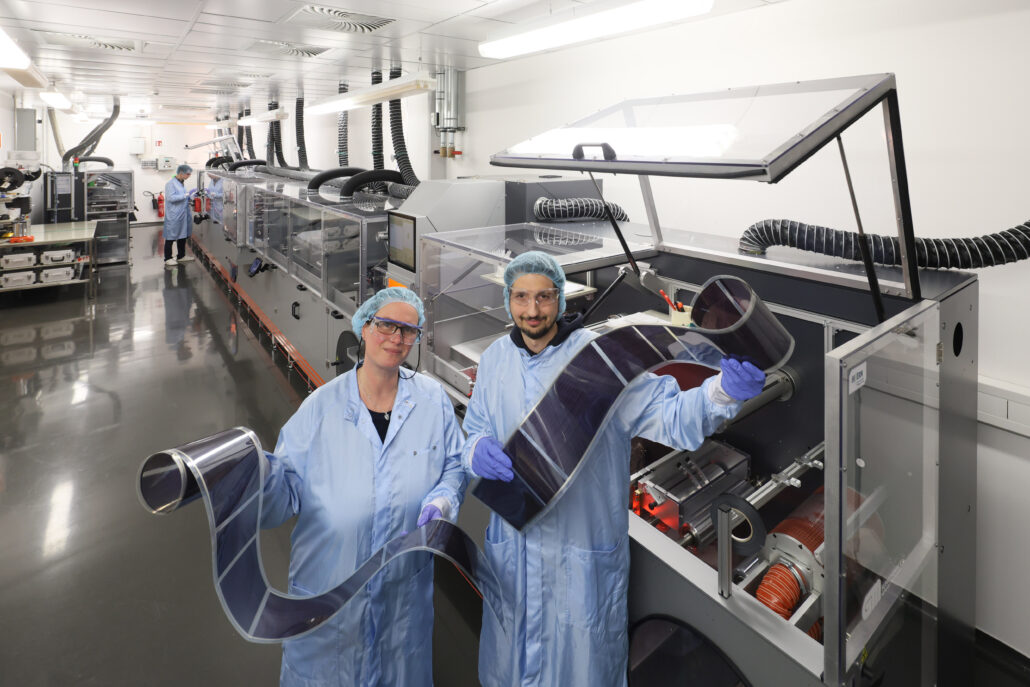
One example is the Solar Factory of the Future at Forschungszentrum Jülich, where researchers collaborate with industry partners on scaling technologies for printed solar modules.
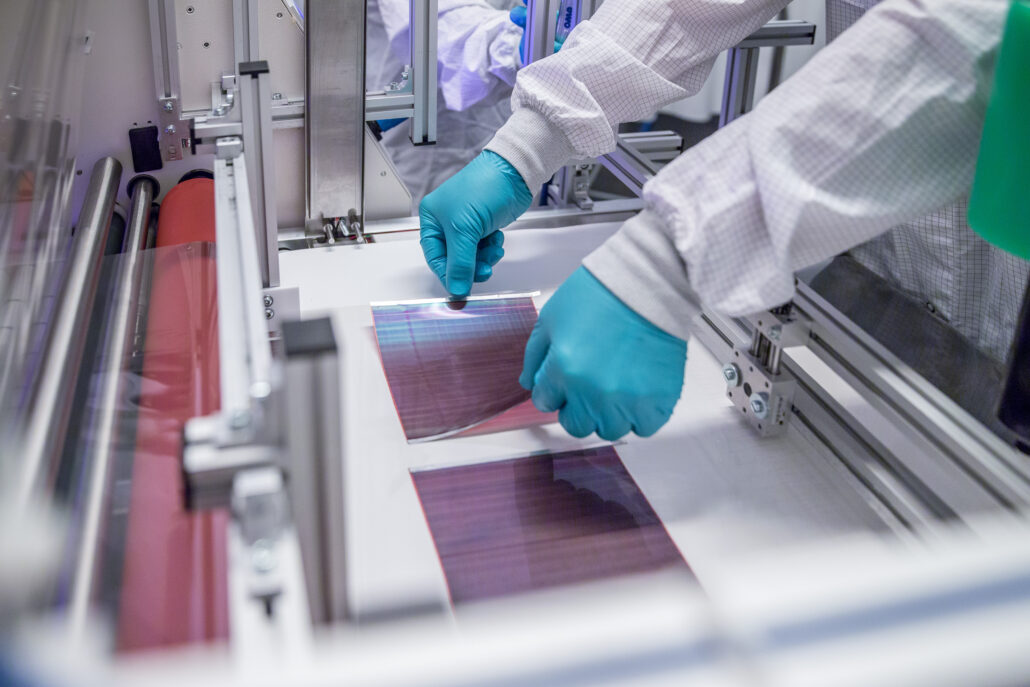
Printed flexible photovoltaic modules at Forschungszentrum Jülich / Solar Factory of the Future. Image: Kurt Fuchs/ Solar TAP

The report also acknowledges Solar TAP’s successful evaluation in September 2025, confirming the value of its cross-institutional approach to technology transfer.

Recognition and motivation for the future

The inclusion of Solar TAP in the Federal Energy Research Report 2026 underscores the importance of connecting scientific excellence with industrial innovation.

It also demonstrates the potential of close collaboration between research institutions and companies to accelerate the development of emerging photovoltaic technologies and bring innovative solutions closer to market readiness.

For Solar TAP, this recognition is both an acknowledgement of the progress achieved so far and a motivation to further strengthen its industry network, initiate new collaborations and support the industrial scale-up of next-generation photovoltaic technologies.

About the Federal Energy Research Report 2026

The Federal Energy Research Report is published by the German Federal Ministry for Economic Affairs and Energy (BMWE). It provides an overview of Germany’s energy research activities, funding priorities and progress in developing innovative energy technologies.

Solar TAP is featured on page 59, in the chapter “Institutional Energy Research,” under the heading “Photovoltaic research as a successful model for technology transfer.”
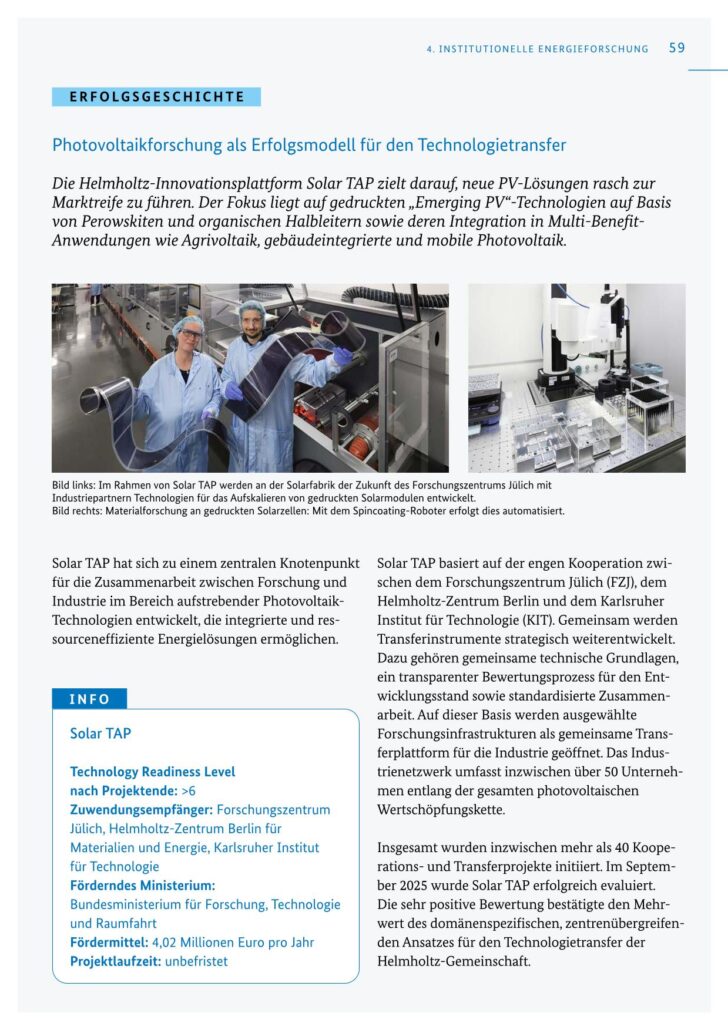
Germany’s Federal Energy Research Report features Solar TAP as a successful model for technology transfer in photovoltaics. Image: BMWE.

Emerging Photovoltaics Across the Report

In addition to the dedicated Solar TAP success story on page 59, the Federal Energy Research Report 2026 features further examples of research and innovation in emerging photovoltaics.

These include flexible organic photovoltaic modules developed by Solar TAP network partner ASCA GmbH & Co. KG (page 29), testing infrastructure for emerging PV technologies at Helmholtz-Zentrum Berlin (page 57), and AI-assisted materials discovery at Helmholtz-Institut Erlangen-Nürnberg für Erneuerbare Energien (page 58).

Together, these examples illustrate the breadth of activities advancing next-generation photovoltaics, from materials research and technology testing to practical applications and industrial technology transfer.

Read the Federal Energy Research Report 2026 (PDF) here.

https://solartap.de/wp-content/uploads/2026/10/Website_Bundesbericht.jpg 768 1366 Stefanie Ditze https://solartap.de/wp-content/uploads/2023/07/logo-solar-tap-navigation.png Stefanie Ditze2026-10-13 08:54:112026-10-13 09:13:55Solar TAP Featured as a Success Story in Germany’s Federal Energy Research Report 2026

Solar TAP nominated for the Endeavours Award 2026

26. March 2026/in News, Prize/by Stefanie Ditze

Solar TAP is nominated for the Endeavours Award 2026 as “Best Innovator”.

Jülich, Germany – Solar TAP has been nominated for the Endeavours Award 2026 in the category “Best Innovator” by Forschungszentrum Jülich. The award recognizes outstanding projects and individuals who successfully translate scientific excellence into solutions with tangible societal and economic impact.

The nomination highlights Solar TAP’s role as an innovation platform accelerating the development and transfer of next-generation photovoltaic technologies. By integrating automated materials development, artificial intelligence-driven data analysis, and process innovation, SolarTAP enables significantly faster pathways from laboratory research to scalable applications.

“The nomination underlines the importance of strong collaboration between research and industry to accelerate sustainable innovation,” the Solar TAP team states.

In close collaboration with partners from academia and industry, Solar TAP focuses on advancing perovskite and hybrid solar technologies and reducing innovation cycles from years to months. The initiative aims to unlock new applications of solar energy across buildings, agriculture, infrastructure, and emerging technology sectors.

Further information:
Endeavours Award

Discover all nominees

https://solartap.de/wp-content/uploads/2026/03/image-2300-79e04d198469a624478077f83fc2ccac-1-e1774434711620.jpeg 290 608 Stefanie Ditze https://solartap.de/wp-content/uploads/2023/07/logo-solar-tap-navigation.png Stefanie Ditze2026-03-26 12:11:032026-05-18 09:43:30Solar TAP nominated for the Endeavours Award 2026

Industry Collaboration Opportunity

2. February 2026/in News, Science Highlight/by Stefanie Ditze

Sol(Di)²T – A Differentiable Digital Twin for Solar Cells – Industry Collaboration Opportunity

Within the Solar TAP collaboration, researchers from KIT, HZB and Forschungszentrum Jülich (FZJ) have developed Sol(Di)²T, a Solar Differentiable Digital Twin for solar cells. The framework is now open for collaboration with industrial partners.

Sol(Di)²T is a fully differentiable digital twin that links materials, device architecture and location-dependent energy-yield prediction in a single framework. It enables data-driven decision-making and accelerates the development, optimization and scale-up of photovoltaic devices, making it highly relevant for industrial R&D and application-specific PV design.

The framework was developed within the Solar TAP infrastructure and supports joint use cases, benchmarking with industrial data, and tailoring the digital twin to concrete PV designs. The corresponding scientific work has been submitted and is currently under review.

The code is available as open source, and a preprint describing the framework can be accessed online.

Interested in collaboration?

Companies interested in data-driven PV design, energy-yield prediction, and digital-twin-based optimization are invited to get in touch.

Contact:
Prof. Carsten Rockstuhl

https://solartap.de/wp-content/uploads/2026/02/Personen2.png 1200 1200 Stefanie Ditze https://solartap.de/wp-content/uploads/2023/07/logo-solar-tap-navigation.png Stefanie Ditze2026-02-02 13:34:432026-02-02 13:34:44Industry Collaboration Opportunity

Solar TAP Year-in-Review 2025

19. December 2025/in News/by Stefanie Ditze

A milestone year for technology transfer.

The Solar TAP Year-in-Review 2025 highlights a milestone year for technology transfer in photovoltaics. Solar TAP would like to thank all partners and network members who have supported the platform throughout this important year.

The key highlight of the year: Solar TAP has proven itself as a successful model for technology transfer and will be continued as a Helmholtz Innovation Platform on a permanent basis. This marks an important step in strengthening long-term collaboration between research and industry and accelerating the transfer of emerging photovoltaic technologies from Helmholtz research into application.

From project to permanent platform

Following a successful evaluation, Solar TAP will continue beyond its initial project phase, which ends in 2025, as a permanently supported Helmholtz Innovation Platform. This ensures sustainable support for industry–science collaboration in emerging photovoltaic technologies and provides a stable framework for long-term innovation activities.

Strong and growing industry engagement

In 2025, the Solar TAP network continued to grow and now encompasses more than 50 companies. Projects within the platform have involved over 60 industrial partners, ranging from start-ups to established industrial players. Industry contributions have continued to increase, reflecting strong trust in Solar TAP and its transfer approach.

Effective technology transfer instruments

With formats such as Exploratory Innovation Activities (EIAs), Solar TAP enables rapid, low-barrier collaboration and early feasibility testing using Helmholtz research infrastructures. Within the first three years, more than 30 EIAs with industry partners were successfully completed, supporting early-stage innovation and accelerating transfer processes.

Application-oriented innovation

Solar TAP activities in 2025 covered a broad range of application-oriented topics – from AgriPV and building-integrated photovoltaics to production technologies for advanced solar cells. Across all activities, the focus remained on practical relevance, scalability, and clear pathways towards industrial application.

Events, exchange and visibility

Throughout the year, Solar TAP fostered exchange and visibility through numerous events and activities. The team participated as an exhibitor at major trade fairs such as LOPEC 2025 and Hannover Messe 2025, welcomed partners at Industry Days, and organised joint events together with Innovation Labs and Hi-Acts.


With its permanent establishment, Solar TAP now enters the next phase with a clear mission: accelerating emerging photovoltaic technologies through close collaboration between research and industry.

We thank all partners for their trust and collaboration in 2025 and look forward to shaping the future of photovoltaics together

https://solartap.de/wp-content/uploads/2025/12/2025-Review-e1766133310887.png 1190 1176 Stefanie Ditze https://solartap.de/wp-content/uploads/2023/07/logo-solar-tap-navigation.png Stefanie Ditze2025-12-19 09:41:052025-12-19 09:41:40Solar TAP Year-in-Review 2025

Solar TAP becomes a permanent Helmholtz Innovation Platform

15. December 2025/in News/by Stefanie Ditze

Solar TAP will be continued on a permanent basis as a Helmholtz Innovation Platform.
Following an excellent evaluation, the Helmholtz Association has decided to establish Solar TAP as a long-term platform, securing its role in accelerating photovoltaic technology transfer between research and industry.

Since its launch in 2023, Solar TAP has evolved into a central hub for cooperation in emerging photovoltaic technologies. With its permanent establishment, Solar TAP now provides a stable framework for long-term collaboration and innovation.

Solar TAP as a joint platform of Helmholtz centres

Solar TAP is coordinated by the Helmholtz Institute Erlangen-Nürnberg for Renewable Energy (HI ERN) and jointly carried by three Helmholtz centres: Forschungszentrum Jülich, Helmholtz-Zentrum Berlin and Karlsruhe Institute of Technology (KIT). Within Solar TAP, these partners bundle their infrastructures and expertise into a Europe-wide unique innovation ecosystem.

Through this joint approach, Solar TAP enables companies to access advanced research infrastructures that are typically only available within large research institutions.

Access to high-end photovoltaic research infrastructures

A core objective of Solar TAP is to provide fast and practical access to state-of-the-art photovoltaic research infrastructures. These include roll-to-roll pilot lines, high-end printing technologies and digital twins.

Within Solar TAP, companies can test materials, components or complete production steps under realistic conditions. This supports early validation, generates reliable data and helps shorten development cycles towards application and market readiness.

Focus on printed and flexible photovoltaic technologies

Solar TAP focuses on printed, ultralight and flexible photovoltaic modules that can be freely shaped and integrated into a wide range of applications. These include use cases in agriculture, building envelopes and mobile systems, where photovoltaics can provide additional functionality alongside energy generation.

By concentrating on emerging photovoltaic technologies, Solar TAP addresses areas with high innovation potential and strong relevance for future energy systems.

Strong and growing industry engagement within Solar TAP

Solar TAP has established itself as a trusted platform for industry collaboration. Today, the Solar TAP network includes more than 50 companies, ranging from start-ups to global market leaders. In research and transfer projects, over 60 industrial partners are already working together with Solar TAP.

The continuous increase in industrial engagement reflects the value of Solar TAP’s open, reliable and low-barrier access to Helmholtz research infrastructures.

Exploratory Innovation Activities as a key transfer instrument

An important element of Solar TAP are the Exploratory Innovation Activities (EIAs). These short and flexible collaboration formats allow projects to start within days or weeks. EIAs enable early feasibility testing, reduce risks and often serve as an entry point into larger cooperative or publicly funded projects.

A stable framework for long-term technology transfer

With its permanent establishment, Solar TAP strengthens its mission to accelerate innovation in emerging photovoltaic technologies. As a Helmholtz Innovation Platform, Solar TAP will continue to support close collaboration between research and industry and contribute to the transfer of new photovoltaic technologies towards application.

https://solartap.de/wp-content/uploads/2025/03/experimental-spin-coating-robot-setup-sciprios-hi-ern-success-story-solar-tap-scaled.jpg 1435 2560 Stefanie Ditze https://solartap.de/wp-content/uploads/2023/07/logo-solar-tap-navigation.png Stefanie Ditze2025-12-15 10:06:332025-12-19 10:10:05Solar TAP becomes a permanent Helmholtz Innovation Platform

Solar TAP Expert Featured on German TV Show

17. November 2025/in News, Interview/by Stefanie Ditze

Solar TAP Expert Featured on German TV Show Showcasing Breakthrough PV Recycling Technology.

The rapid global expansion of photovoltaics brings with it an important long-term challenge: the responsible and resource-efficient recycling of end-of-life solar modules. By 2050, global PV waste is expected to reach 21–35 million tons, containing valuable materials such as glass, aluminum, silicon, silver, and copper. The recovery and reuse of these components will play a crucial role in building a sustainable and resilient solar industry.

In this context, Dr. Ian Marius Peters, Principal Investigator of Solar TAP at the Helmholtz Institute Erlangen-Nürnberg for Renewable Energies (HI ERN), was recently invited as an expert on the popular German science TV program “Einfach Genial” (“Simply Ingenious”). The episode highlighted an innovative recycling technology developed by FLAXRES GmbH in Dresden.

FLAXRES presented a novel approach based on ultrabright light pulses — 50,000 to 80,000 times brighter than the sun — capable of separating PV modules into their components within milliseconds. This technique aims to enable the clean recovery of high-value materials, offering a potential leap forward for circularity in the PV sector.

Dr. Peters provided scientific insights into the challenges and opportunities of scaling advanced recycling solutions, emphasizing their relevance for a future-proof solar energy system.

Copyright: MDR/Einfach Genial

“Technologies that improve material recovery are essential for a circular PV economy,” Dr. Peters noted during the broadcast.

The feature underscores the importance of collaborative efforts between research institutions, industry partners, and innovators — a core mission of Solar TAP, which supports the development and implementation of transformative technologies across the entire solar lifecycle.

Watch the full episode in German here.

Solar TAP continues to promote research, innovation, and knowledge exchange to advance sustainable PV deployment and circular material flows throughout Europe and beyond.

https://solartap.de/wp-content/uploads/2025/11/MDR-Einfach-Genial.png 776 1391 Stefanie Ditze https://solartap.de/wp-content/uploads/2023/07/logo-solar-tap-navigation.png Stefanie Ditze2025-11-17 11:57:142025-11-17 11:57:15Solar TAP Expert Featured on German TV Show

Solar TAP Research Featured Among Poster Award Winners at EU PVSEC 2025

30. September 2025/in News, Science Highlight/by Stefanie Ditze

We are proud to highlight the excellent scientific contribution of Marie-Louise Schubert, PhD researcher at the Karlsruhe Institute of Technology (KIT) in the group of Prof. Carsten Rockstuhl, whose work was selected among the Poster Award Winners at the EU PVSEC 2025.

Copyright: EUPVSEC.

Her poster, “Towards a Fully Differentiable Digital Twin for Solar Cells: Simulation Steps”, presents a key advancement toward a digital twin framework for photovoltaic devices. The project integrates morphology, optical simulation, electronic transport, and energy yield prediction into a unified, partly machine-learned workflow. The approach enables faster optimization and improved design of next-generation PV technologies.

Copyright: Marie-Louise Schubert.

The work closely aligns with Solar TAP’s mission to accelerate solar innovation through data-driven design, multiscale modeling, and digital workflows.

“Digital twins offer a powerful way to speed up PV development and connect material insights with device performance. This award-winning work is an excellent example of that potential.” — Solar TAP Manager, Dr. Jens Hauch

Solar TAP congratulates Marie-Louise Schubert and the project team on this recognition and their contribution to advancing digital twin technologies for photovoltaics.

Press Release Poster Award Winners – EU PVSEC 2025

Copyright: Marie-Louise Schubert
https://solartap.de/wp-content/uploads/2025/12/Winners.jpg 427 640 Stefanie Ditze https://solartap.de/wp-content/uploads/2023/07/logo-solar-tap-navigation.png Stefanie Ditze2025-09-30 09:04:002025-12-02 09:40:59Solar TAP Research Featured Among Poster Award Winners at EU PVSEC 2025

Solar TAP at the Western Balkans Energy Conference

21. July 2025/in News, Event review/by Irina Döhrer

Solar TAP at the Western Balkans Energy Conference – Connecting Ideas & Driving Collaboration

On July 10, 2025, Solar TAP Researcher Niklas Albinius from Helmholtz-Zentrum Berlin proudly participated in the conference “Decentralized Energy Supply for Self-Consumption with PV in the Western Balkans” in Skopje, organized by AHK North Macedonia. The event served as a key platform for fostering collaboration between German and Macedonian stakeholders on the future of decentralized solar energy.

Invited by the organizers, he delivered an insightful presentation on Building-Integrated Photovoltaics (BIPV), highlighting the importance of stakeholder communication and sharing best practices from Germany’s energy transition. His contribution underlined how innovative BIPV solutions can unlock new opportunities for sustainable building design in the Western Balkans.

Solar TAP Researcher Niklas Albinius at the Western Balkans Energy Conference

The conference featured a high-level exchange of expertise, with discussions on:

  • Innovative BIPV technologies and effective stakeholder engagement
  • Energy storage solutions and the rise of energy communities
  • Financing mechanisms for PV projects in North Macedonia
  • Strategic consulting, digitalisation, and energy planning for the future of smart energy systems

Through expert presentations, interactive panel discussions, and intensive B2B matchmaking sessions, the event successfully connected innovative German companies with local stakeholders to explore partnerships and accelerate the region’s solar transformation.

By engaging in these dialogues, Solar TAP reaffirmed its commitment to supporting sustainable energy transitions, not only by advancing PV technologies but also by building bridges between markets and stakeholders.

The Western Balkans conference once again demonstrated that collaboration, knowledge exchange, and innovation are essential to shaping a resilient and decentralized energy future.

https://solartap.de/wp-content/uploads/2025/08/VKRPHOTOGRAPHY-123-scaled.jpg 1707 2560 Irina Döhrer https://solartap.de/wp-content/uploads/2023/07/logo-solar-tap-navigation.png Irina Döhrer2025-07-21 15:57:242025-08-29 10:15:41Solar TAP at the Western Balkans Energy Conference

Solar TAP Digital Twin Workshop for Emerging PV

8. July 2025/in News, Event review/by Irina Döhrer

Workshop Review: Towards a Digital Twin for Emerging Photovoltaics

From June 30 to July 1, 2025, over 25 researchers, students, and industry professionals gathered virtually across two afternoons to explore the current landscape and future directions of digital twin approaches for emerging photovoltaic (PV) technologies. The workshop provided a platform for exchange across various disciplines and perspectives, spanning from materials science to device simulation and systems engineering. Participants included PhD students, postdoctoral researchers, professors, and representatives from industry. Companies such as JCMwave and Fluxim shared their current simulation approaches and research tools, adding valuable applied insight to the discussion.

The program on Day 1 provided an overview of the Solar TAP initiative, with sessions on morphology formation (Olivier Ronsin, HI ERN), optical simulation (Carsten Rockstuhl, KIT), and photonic modeling using JCMsuite (Sven Burger, JCMwave). These talks emphasized the role of structural and optical modeling in the development of digital twins.

Sven Burger (JCMwave) with session on photonic modeling using JCMsuite @copyright Forschungszentrum Jülich GmbH
Olivier Ronsin (HI-ERN) with session on morphology formation @ copyright by Forschungszentrum Jülich GmbH

Day 2 focused on device-level modeling using SETFOS (Urs Aeberhard, FLUXiM), energy yield modeling (Seyedamir Orooji, KIT), and the application of machine learning and optimization techniques (Pascal Friederich, KIT).

Pascal Friederich (KIT) with focus on the application of machine learning and optimization techniques @copyright by Forschungszentrum Jülich GmbH

Together, these sessions illustrated how Solar TAP aims to unify a diverse set of modeling tools—from material morphology to system performance—into a comprehensive digital twin framework for flexible, printed, and emerging PV technologies.

The workshop was coordinated by Marie Louise Schubert (KIT) and Carsten Rockstuhl (Solar TAP PI). It brought together researchers from academia and industry to collectively advance the development of digital twins for next-generation photovoltaic systems.

We thank all speakers and participants for their inspiring contributions and look forward to further collaboration within the Solar TAP community.

https://solartap.de/wp-content/uploads/2025/07/DigitalTwin_Overview-scaled.jpg 1421 2560 Irina Döhrer https://solartap.de/wp-content/uploads/2023/07/logo-solar-tap-navigation.png Irina Döhrer2025-07-08 14:42:232025-07-31 08:56:30Solar TAP Digital Twin Workshop for Emerging PV

Solar TAP at the 6th AgriVoltaics World Conference

7. July 2025/in News, Event review/by Irina Döhrer

Solar TAP Showcases the Future of Sustainable Farming at the 6th AgriVoltaics World Conference in Freiburg

The 6th AgriVoltaics World Conference has wrapped up after three vibrant days of scientific exchange, innovation, and cross-sector collaboration—and Solar TAP was right at the heart of it.

Solar TAP Showcases the Future of Sustainable Farming at the 6th AgriVoltaics World Conference

As a bronze sponsor of the event, Solar TAP proudly joined researchers, policy makers, and industry leaders in exploring the synergy between agriculture and solar energy. The conference, held from July 1–3, 2025, brought together experts from fields as diverse as photovoltaics, plant biology, hydrology, energy systems, and agronomy. For Solar TAP, it was a unique opportunity to share its vision for a future where printed solar technologies power more resilient and productive agricultural systems.

Solar TAP at the 6th AgriVoltaics World Conference @ Forschungszentrum Jülich GmbH

At the Solar TAP booth, visitors experienced flexible organic photovoltaic (OPV) modules, insights into printed solar technologies for sustainable agriculture, the first fruits and vegetables grown under Agri-PV — and attendees even tasted the future of farming, with cucumbers and strawberries grown in Solar TAP systems.

First fruits and vegetables grown under Agri-PV @ copyright Forschungszentrum Jülich GmbH

Within Solar TAP’s conference exhibit visitors had the opportunity to engage with Dr. Onno Muller, an expert in plant ecophysiology and high-throughput phenotyping in agrivoltaic systems; Dr. Matthias Meier-Grüll, who leads Agri-Horti-PV projects and coordinates the interdisciplinary hub “Bioeconomy meets Energy”; and Chantal Kierdorf, who welcomed guests and shared the latest insights into research and practical applications of printed solar technologies in agriculture.

Dr. Matthias Meier-Grüll and Chantal Kierdorf share the latest insights into research of printed solar technologies in agriculture @ copyright Forschungszentrum Jülich GmbH

One of the highlights was Extended Technical Tour 1 to the Agri-Food & Energy Park in Morschenich, operated by Forschungszentrum Jülich, where Solar TAP innovations are being used in real-world pilot projects combining crop cultivation with real-time data monitoring under APV structures.

Tour to the Agri-Food & Energy Park in Morschenich @ copyright Forschungszentrum Jülich GmbH

As the AgriVoltaics World Conference continues to grow in global significance, Solar TAP reaffirms its commitment to pushing the boundaries of sustainable agriculture and clean energy integration. From lab to field, and now from science to taste, the Solar TAP journey is just beginning.

https://solartap.de/wp-content/uploads/2025/07/1751874039744.jpg 960 1280 Irina Döhrer https://solartap.de/wp-content/uploads/2023/07/logo-solar-tap-navigation.png Irina Döhrer2025-07-07 15:43:312025-07-16 16:04:05Solar TAP at the 6th AgriVoltaics World Conference
Page 1 of 41234

Search

Search Search

Recent Posts

  • Solar TAP Featured as a Success Story in Germany’s Federal Energy Research Report 2026
  • Perovskite Solar Cells: From Research to Real-World Impact
  • Helmholtz Tech & Industry Day 2026
  • Solar TAP at HANNOVER MESSE 2026 | Connecting Research and Industry for Next-Generation Photovoltaics
  • Solar TAP nominated for the Endeavours Award 2026

Recent Comments

  • arderbor elnot on NGSE11 – Next Generation Solar Energy 2026
  • arderbor elnot on Energy Campus Nürnberg (EnCN)

Archives

  • October 2026
  • June 2026
  • April 2026
  • March 2026
  • February 2026
  • December 2025
  • November 2025
  • October 2025
  • September 2025
  • July 2025
  • June 2025
  • April 2025
  • March 2025
  • February 2025
  • January 2025
  • December 2024
  • November 2024
  • October 2024
  • September 2024
  • August 2024
  • June 2024
  • April 2024
  • December 2023
  • November 2023
  • July 2023
  • April 2023

Categories

  • Event review
  • Helmholtz
  • Interview
  • News
  • Prize
  • Science Highlight
  • Uncategorized

Meta

  • Log in
  • Entries feed
  • Comments feed
  • WordPress.org
© Copyright - Solar TAP - Energy Redefined
  • Legal Notice
  • Privacy Policy
Scroll to top Scroll to top Scroll to top